
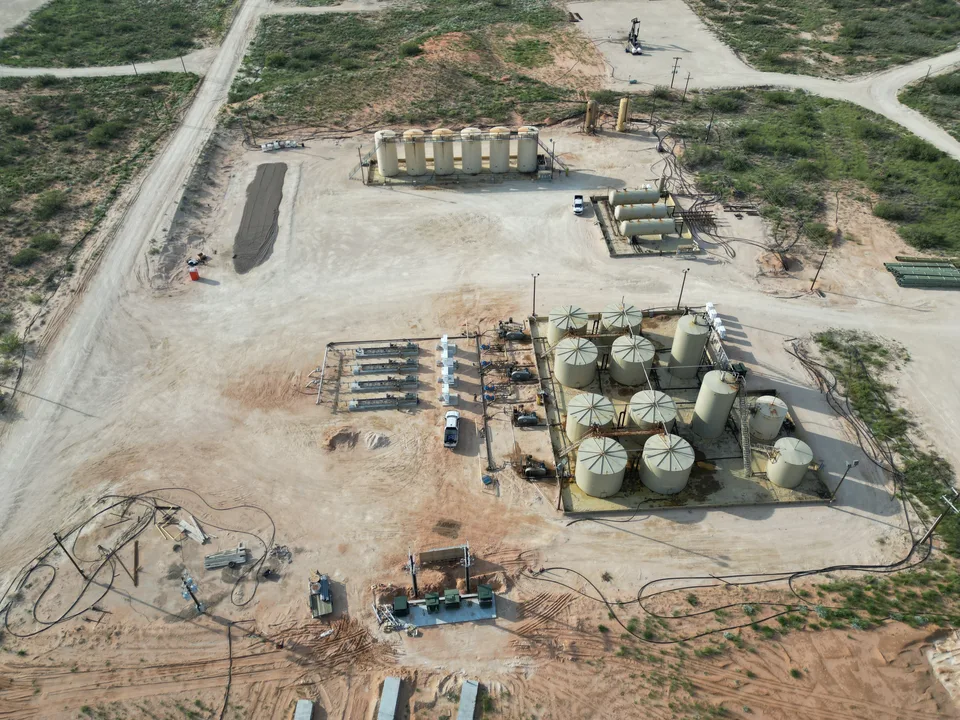
When utility power drops at a compressor station, operators may still need pressure readings, equipment status and a communications link while the compressor is stopped. Keeping those circuits powered is a different job from restarting a motor or keeping a generator ready to crank. A useful backup plan starts by listing what needs power, how long it needs it and how much interruption it can tolerate.
What needs backup at each site?
- Well pads and production sites. Start with tank-level monitoring, site telemetry and the radio or network equipment that sends data back to operations. If the same project includes artificial lift or produced-water pumps, list their motor loads and starting demand separately.
- Gathering and compressor stations. List the station controls, pressure and flow instruments and selected auxiliaries that need to remain available during a supply interruption. If the duty includes running or restarting an electric compressor, record its drive and starting requirements as their own scope.
- Pipeline and metering stations. Identify what supplies the flow computer, remote terminal unit and communications link. Check which circuits already have a local UPS or DC supply and which depend on an upstream AC panel.
- Gas processing plants. Decide which instrumentation, control-room equipment or auxiliaries need backup during a plant outage. For an expansion, also check the transformer and feeder interfaces that serve the new process area.
Pipeline control centers use field readings and equipment status for monitoring and alarms. That makes it useful to document both the field device and the communications path it relies on. PHMSA on remote pipeline control centers.
Separate AC backup, DC power and engine starting
- AC battery storage. A battery energy storage system (BESS) can support selected AC circuits for a set period, or supply them during a generator start sequence where the project design allows. Record the power needed in kW and the target runtime. Usable energy in kWh helps determine how long the battery can support the load.
- Dedicated UPS and station DC. Sensitive controls may have a dedicated uninterruptible power supply. Some protection and breaker trip circuits have a station battery and charger that serve a DC bus. List those systems separately so the project team can assess transfer tolerance, autonomy and which AC supplies feed them.
- Generator starting and standby output. Starter batteries provide the brief power needed to crank an engine. The running generator can then supply designated loads for a longer outage. Include the generator and its starting arrangement in the project documents when considering how storage would fit.
U.S. Department of Energy on storage power and energy and SENS examples of dedicated DC and engine-starting duties.
A battery and generator at a Permian Basin water-transfer site
In a project reported by Aggreko, a battery system powered metering and pump operations at a remote water-transfer site. A gas generator charged the battery and could take over when the site needed more power. That arrangement gave the battery and generator separate jobs. On another site, the backup scope might cover only metering and communications. The pump load is a separate decision. Aggreko’s Permian Basin case study.
Match the equipment to the facility’s distribution system
Zeus sources battery energy storage, including the AC-output PowerEdge family built in Houston by Alchemy Industrial. Zeus can also source distribution equipment for a new connection, a capacity upgrade or a replacement.
- Pad-mounted transformers. Match the primary and secondary voltage, phase, kVA and connection arrangement to the service and downstream equipment. A nameplate photo and drawing help when replacing an existing unit. Browse transformers.
- Medium-voltage cable accessories. Match elbows, feedthrus and inserts to the cable and equipment interfaces shown on the drawings. Include the voltage class, current rating and mating interface. Browse cable accessories.
- Connectors and grounding. For distribution connections, send conductor material, size and the connector callout. Include the specified grounding components in the bill of materials when they are part of the work. Browse connectors and ground rods.
Show the proposed equipment locations and any area classification on the project drawings. The electrical team can use that information to verify which equipment and wiring suit each location. OSHA requirements for classified locations.
What to send Zeus for a quote
Bring the load list, voltage and target runtime, plus any starting demand or transfer limits. Include the one-line diagram, existing generator or UPS details, and the equipment list with the delivery location and required date. Those details let Zeus review battery and distribution sourcing against the same project requirements.
Explore Oil & Gas equipment sourcing or request a quote with your application details.